Hiroshige prints
Utagawa Hiroshige (1797–1858) was one of the last great masters of the Japanese woodblock print. His final series, One Hundred Famous Views of Edo, shows the city that became Tokyo through its seasons: rain on a bridge, fireworks over the river, maples in autumn. Its bold cropping and flat colour later inspired Van Gogh, Monet and Whistler.
-
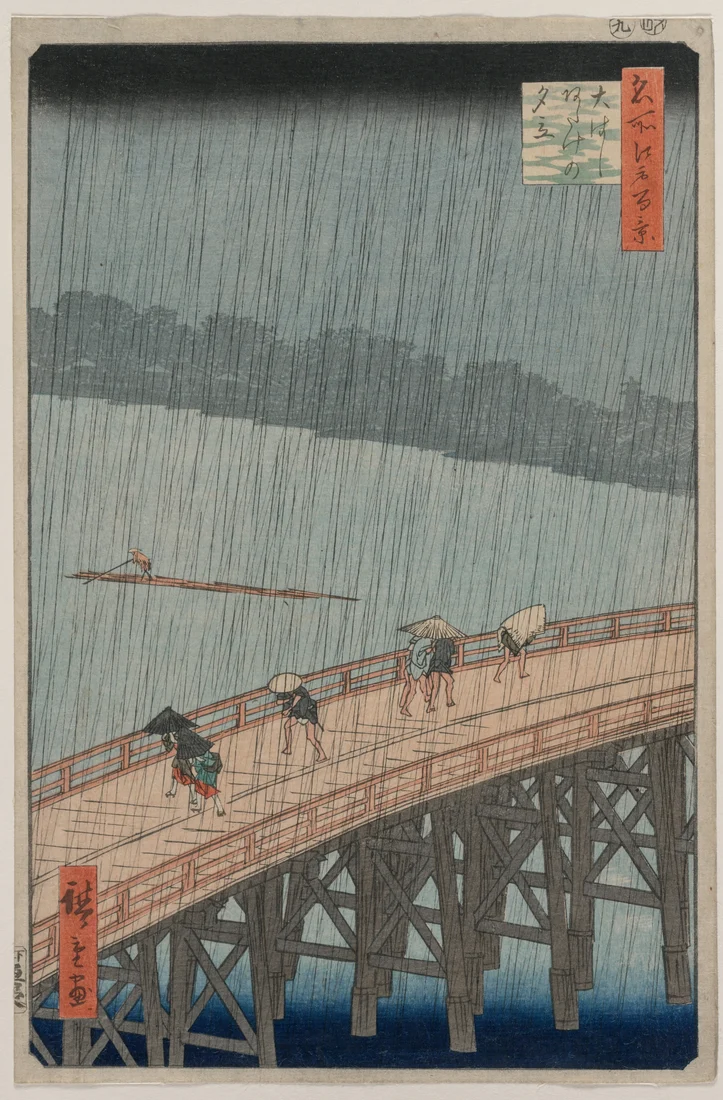 Utagawa Hiroshige
Sudden Shower over Shin-Ohashi Bridge and Atake, 1857
from 399 kr
-
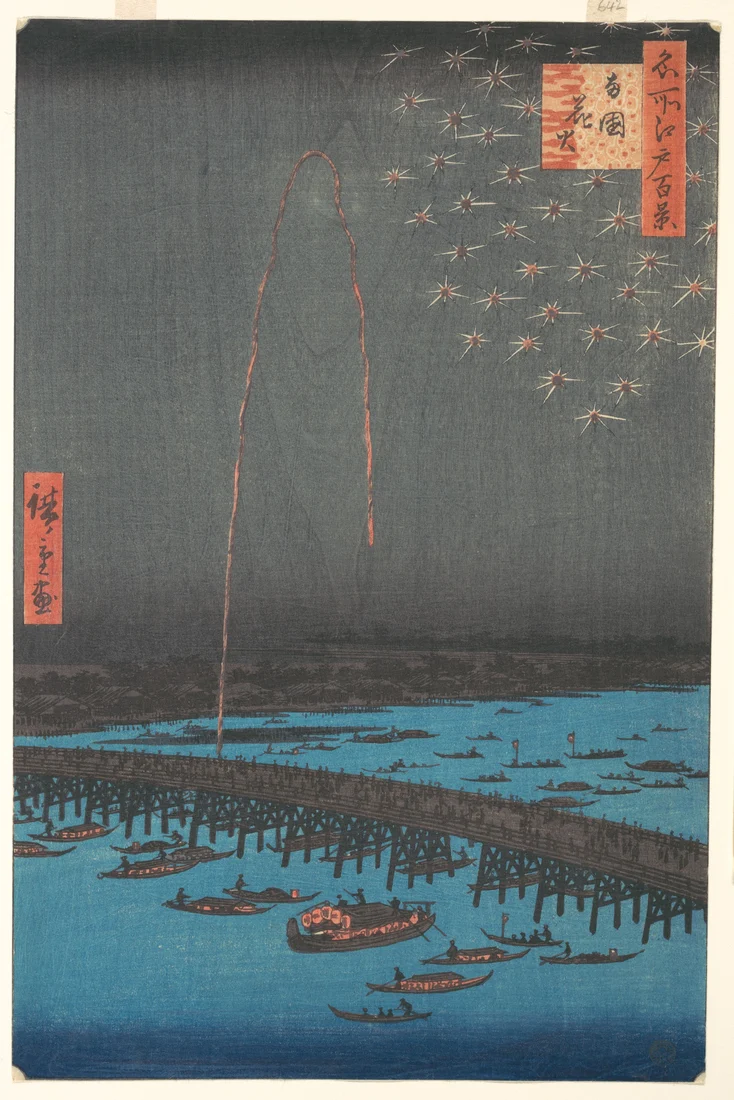 Utagawa Hiroshige
Fireworks at Ryogoku Bridge, 1858
from 399 kr
-
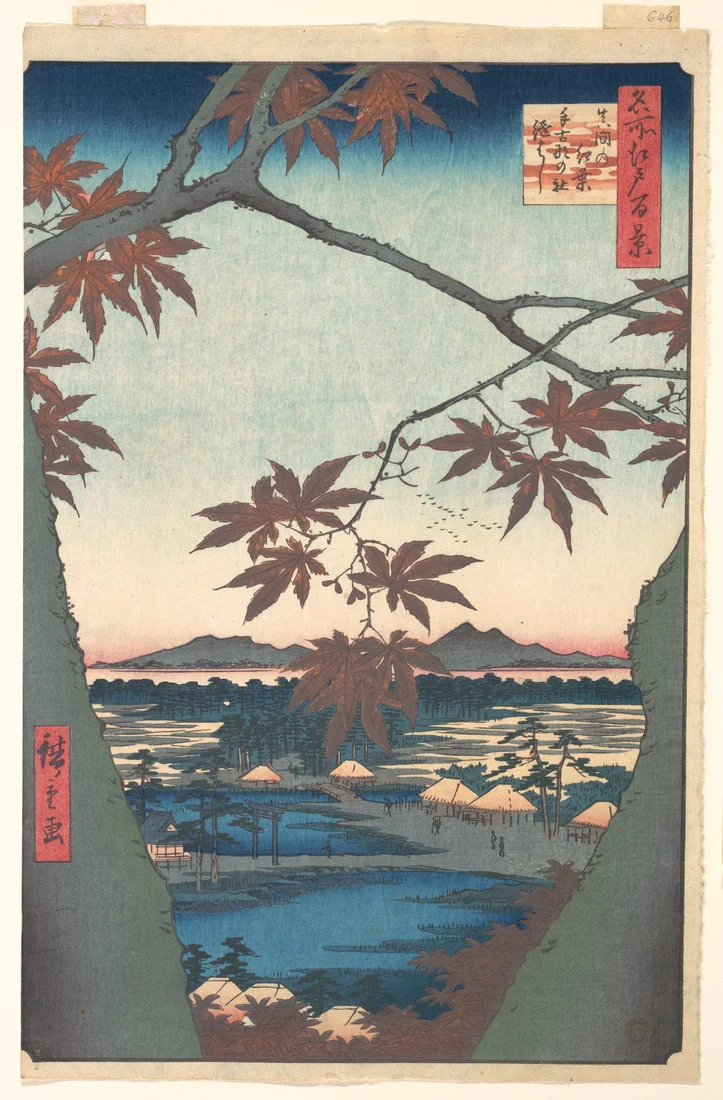 Utagawa Hiroshige
Maples at Mama, ca. 1857
from 399 kr
Our Hiroshige prints are made from high-resolution museum scans of original impressions, and reproduce the whole sheet, including the cartouches with the title and series name. The blues, greys and rust-reds sit well in calm interiors, from pale Scandinavian rooms to warm wood and linen.
The prints are vertical, like the originals, and look best in 50×70 cm or smaller; Sudden Shower is detailed enough to go up to 70×100 cm.
Questions
Hiroshige vs Hokusai: what is the difference?
Hokusai (1760–1849) is the older of the two and the bolder: strong forms, drama, the Great Wave from Thirty-six Views of Mount Fuji (c. 1830–32). Hiroshige (1797–1858) is the quieter: weather, light and everyday places, rain over a bridge, fireworks over a river, in One Hundred Famous Views of Edo (1856–58). On a wall, Hokusai shouts a little and Hiroshige sets a mood. We print Hiroshige.
Are these original woodblock prints?
No. They are fine art prints made from museum scans of original 1850s woodblock impressions, printed on matte fine art paper. The originals are in the public domain.
Which Hiroshige print is the most famous?
Sudden Shower over Shin-Ohashi Bridge and Atake (1857) is among the best known; Van Gogh painted his own copy of it in 1887.