try it
Try it on a wall.
Everything happens in the picture: tap a marker to paint the wall, change the furniture, the rug or the plant, or change the prints, their size and frame. Switch rooms in the corner. The prints hang the way framers hang them, to scale. What to look for.
Change the piece
On the floor
Beside it
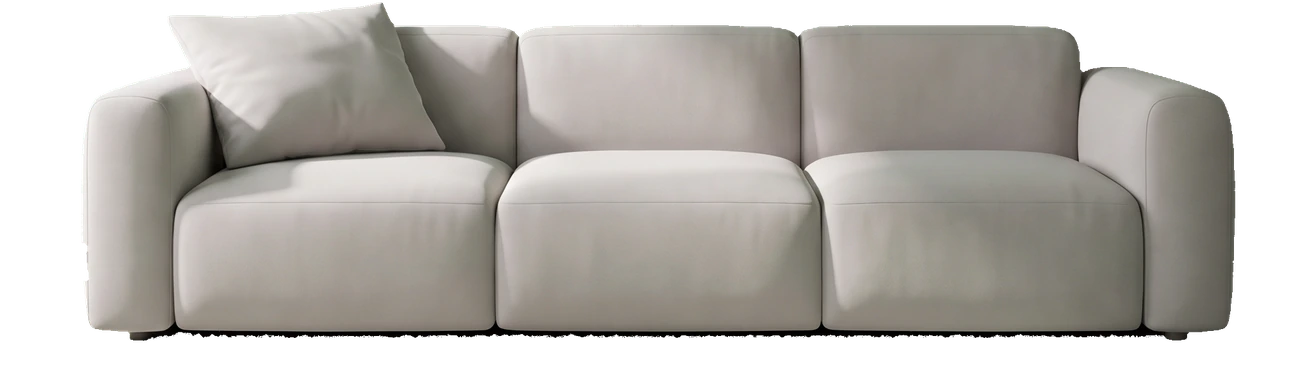
Tap the sofa to change it, its colour or what stands beside it. Tap the wall to paint it. Tap a print to change it, its size or frame.
in your cart
the collection · tap a print to hang it
what you are looking at
How art looks on different walls
The wall art visualiser above shows our prints the way they would arrive: four illustrated rooms, the frames drawn to scale with their 5 cm white mounts, hung at the height a framer would choose. Change the wall colour and the furniture and the same print reads differently; that is the point of trying before buying. A few things people discover in it.
The wall colour changes the print more than the frame does
Hiroshige's rain over Shin-Ohashi Bridge turns cool and quiet on a sage or grey-blue wall and becomes a jewel on terracotta. Hilma af Klint's apricot and lilac forms sit naturally on warm whites, dusty pink and olive, and look surprisingly good on a deep green. Kandinsky's Improvisation No. 30 holds its own on almost anything but asks for a calm wall around it. Paint the wall first, then judge the print; the frame colour is the last decision, not the first. For the colour theory behind this, see which wall colour makes art pop and matching art to your colour scheme.
Size looks different on a wall than in a hand
A 50 × 70 cm frame feels large on a desk and modest above a 240 cm sofa. The visualiser hangs each print at about two thirds of the furniture's width, so switching from the sofa to the armchair or the sideboard shows which size each piece of furniture actually wants. If you want the numbers, they are in the guides: what size art above a sofa, what art goes above a bed, how high to hang art and gallery wall spacing.
One large print or a set
The layout buttons under the room switch between one print, a pair and a set of three with the largest in the middle. One large print reads as a statement and suits a sofa or a bed; a pair suits a sideboard or a bed with two lamps; three in a row suit a long wall or a hallway. Try all three on the same wall before deciding; the difference is bigger than most people expect. More in one large print or several.
The same print in four rooms
The living room has the warmest light, the kitchen the hardest floor, the bathroom the most white, the bedroom the softest furniture. A print that looks right in one may look wrong in another, so if you are buying for a specific room, pick that room, paint the wall your colour, and look at it there rather than in the room that happens to open first.
Our sizes
| Frame | Image inside the mount | Where it tends to go |
|---|---|---|
| 30 × 40 cm (12 × 16 in) | 20 × 30 cm (8 × 12 in) | a desk, a narrow console, or three in a row above a sideboard |
| 50 × 50 cm (20 × 20 in) | 40 × 40 cm (16 × 16 in) | a small wall, a bedside, or a pair above a short sofa |
| 50 × 70 cm (20 × 28 in) | 40 × 60 cm (16 × 24 in) | a single above a sideboard, a pair above a sofa or bed |
| 70 × 100 cm (28 × 40 in) | 60 × 90 cm (24 × 35 in) | a single above a sofa or bed, a pair on a long wall |
Sizes are frame sizes; framed prints come with the mount already fitted, ready to hang, and the unframed art print uses the full sheet. Browse the framed art prints, or start from an artist: Hiroshige, Hilma af Klint, Kandinsky.
Questions
- Can I see a print on my own wall?
- Not yet. The visualiser uses four illustrated rooms; a version that works from a photo of your own wall is in development, and the waitlist hears first.
- Is the scale accurate?
- Yes. Each room has a known width, and frames, mounts and the gaps between them are drawn in centimetres from that, so a 70 × 100 cm frame above the 240 cm sofa is the proportion you would get at home.
- Is the size the frame or the image?
- The frame. Framed prints have a 5 cm white mount on all sides, so a 50 × 70 cm frame shows a 40 × 60 cm image. Unframed prints use the full sheet.
- Why do the prints hang where they do?
- At about two thirds of the furniture's width and a hand's width above it, which is how framers and interior designers hang art. The numbers are in the guides linked above.
- Are the rooms real?
- No, they are illustrations made for the visualiser, so that the walls can be repainted. The prints are shown as they are printed, never redrawn.